

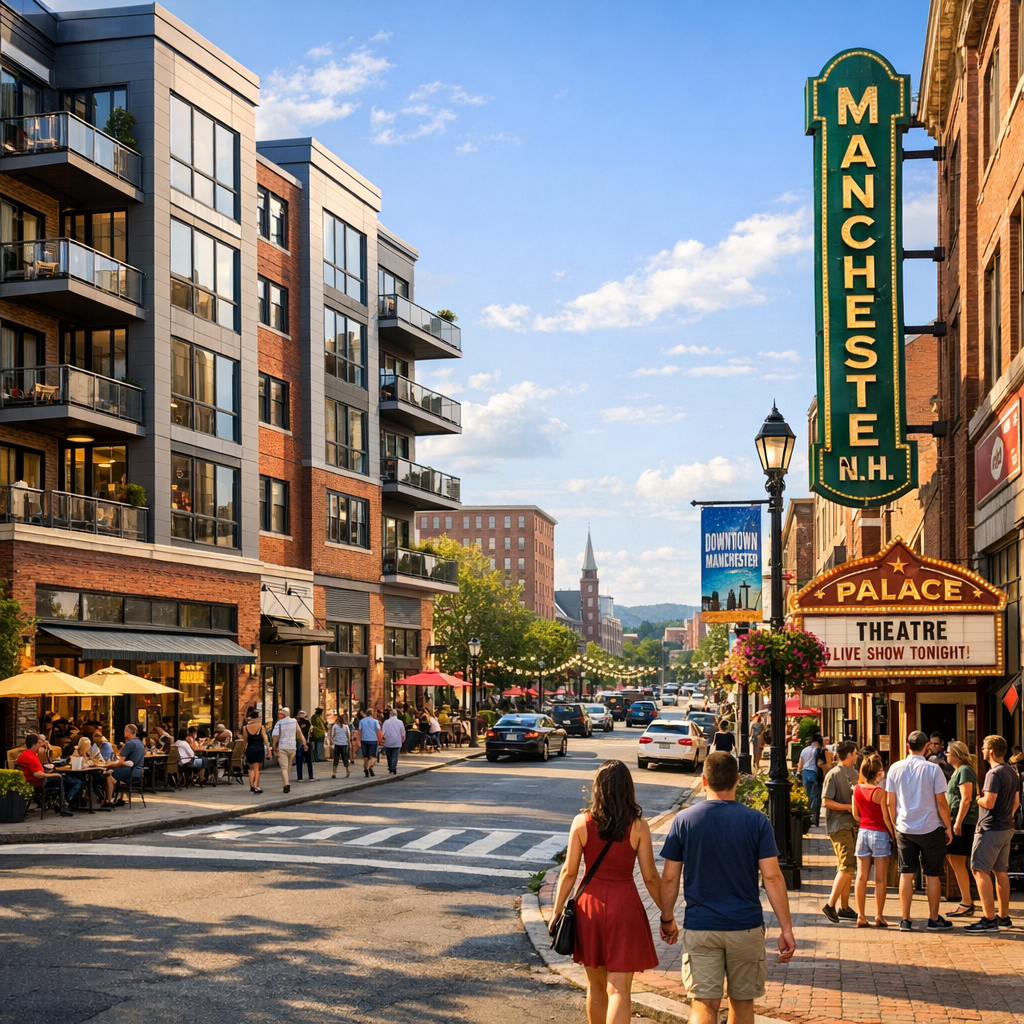
Manchester, New Hampshire, continues to experience significant economic growth and transformation, driven by strategic developments and a resilient business community.
Population and Economic Indicators
As of 2026, Manchester’s population is projected to reach 117,101, reflecting a steady annual growth rate of 0.6%. The median household income stands at $77,415, slightly above the national median, while the median home value is $336,300, indicating a robust housing market. The city’s unemployment rate remains low at 3.8%, showcasing a stable labor market.
Downtown Revitalization and Housing Developments
The downtown area has witnessed a surge in luxury apartment developments, contributing to its revitalization. Notable projects include The Factory at Willow, 75 Canal, and the conversion of office spaces into residences at 1000 Elm Street and The Lofts at Waumbec Mill. These developments have attracted professionals seeking modern living spaces, thereby enhancing the vibrancy of the city center.
Commercial Real Estate and Business Expansion
Manchester’s commercial real estate sector has seen significant activity. The sale of a net-leased asset on South Willow Street for $3.7 million underscores the demand for high-quality retail spaces. Additionally, the full lease-up of a newly constructed 17,520-square-foot contractor bay building at 983 South Mammoth Road highlights the strong demand for industrial spaces catering to contractors and service providers.
Outdoor Industry and Economic Impact
The outdoor industry plays a pivotal role in Manchester’s economy, contributing $3.9 billion and supporting over 30,000 jobs. The city’s commitment to this sector was evident during the inaugural New Hampshire Outdoor Industry Day, celebrated with a pop-up festival in Veterans Memorial Park, emphasizing the importance of outdoor recreation to the local economy.
Labor Market Trends
While New Hampshire’s labor market experienced a slowdown in 2025, with fewer jobs filled and a slight increase in unemployment, Manchester’s economy remained resilient. The city’s diverse economic base and proactive development strategies have positioned it well to navigate these challenges.
In summary, Manchester’s economic landscape is characterized by steady population growth, dynamic real estate developments, and a strong commitment to key industries. These factors collectively contribute to the city’s ongoing prosperity and appeal as a vibrant place to live and work.