

An Evolving Job Market and Economic Strengths
The Manchester–Nashua region continues to see low unemployment, signaling resilience in its labor market. As of June, the unemployment rate stood at 2.7%, down by 0.6 points from the previous year. Key sectors—including education, healthcare, and professional services—are driving much of the new job growth. Meanwhile, manufacturing has seen modest declines, but recent contracts in defense and semiconductor work are expected to help stabilize changes in that sector. These shifts reflect broader economic realignments, with knowledge-based industries becoming increasingly central. (Sources: Bureau of Labor Statistics data; HUD/PD&R employment reports)
Resources for Entrepreneurs and Growing Businesses
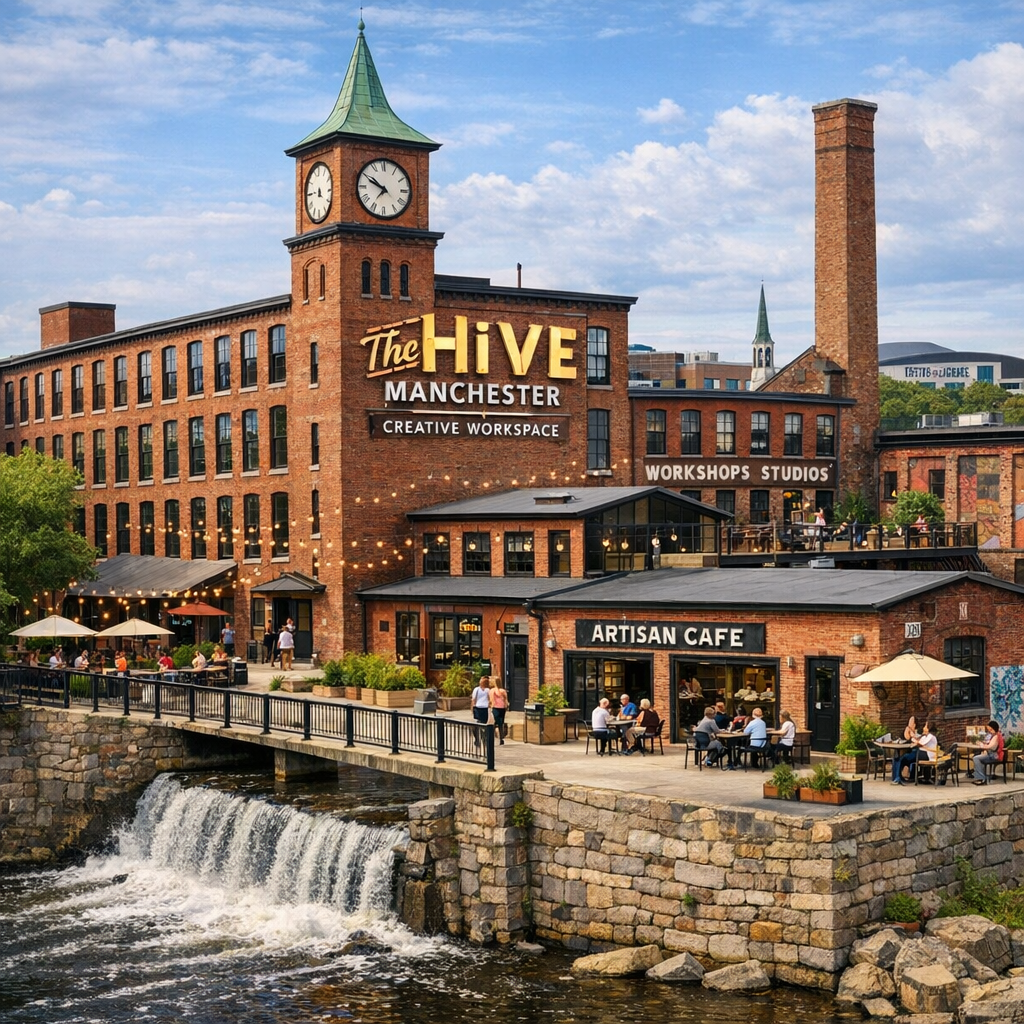
Manchester supports entrepreneurs through several institutions and programs. The New Hampshire Small Business Development Center offers free consulting, training, and guidance in the greater Manchester area. Developers have also repurposed historic mill buildings—for example, The Factory on Willow is offering flexible workspace for creatives, startups, and small firms, blending entrepreneurial and artistic activity. These shared spaces reflect a rising demand for affordable, amenity-rich environments where networking happens organically.
Incentives, Financing & Fiscal Environment
One advantage Manchester offers is its favorable tax and incentive landscape: there is no personal income tax or sales tax in New Hampshire, and state-level R&D, economic revitalization, and business enterprise tax credits are available in designated zones. Locally, the Queen City Loan Fund provides gap financing to support existing businesses in expanding or relocating efforts. Programs aimed at facade improvement and rehabilitation also help by encouraging private investment in targeted business districts.
Challenges & Areas to Watch
Despite recent momentum, growth has been slower than in many New England metro areas. Nonfarm payroll increases have lagged relative to regional peers, and manufacturing jobs continue to decline overall. Rising housing cost pressures also pose challenges for retaining talent, especially for early-career professionals or those launching ventures. Ensuring affordable workspaces, access to capital, and continued investment in infrastructure remain pressing priorities.
Looking Ahead: Growth Paths Manchester Might Take
Several opportunities stand out. Continued investment in advanced manufacturing—especially in defense-related industries and semiconductors—could help stabilize job losses in traditional factories. Likewise, expanding transportation and connectivity infrastructure will help Manchester fully leverage its proximity to Boston. Supporting creative sectors, tech incubators, and small business networks will deepen local roots. Lastly, balancing economic development with livability—affordable housing, workforce training, and preserving community character—will be central to sustainable long-term success.
Manchester’s entrepreneurial ecosystem and business climate position it well for growth. With smart policies and community investment, the city can continue turning its economic strengths into opportunity for more local businesses and workers.