

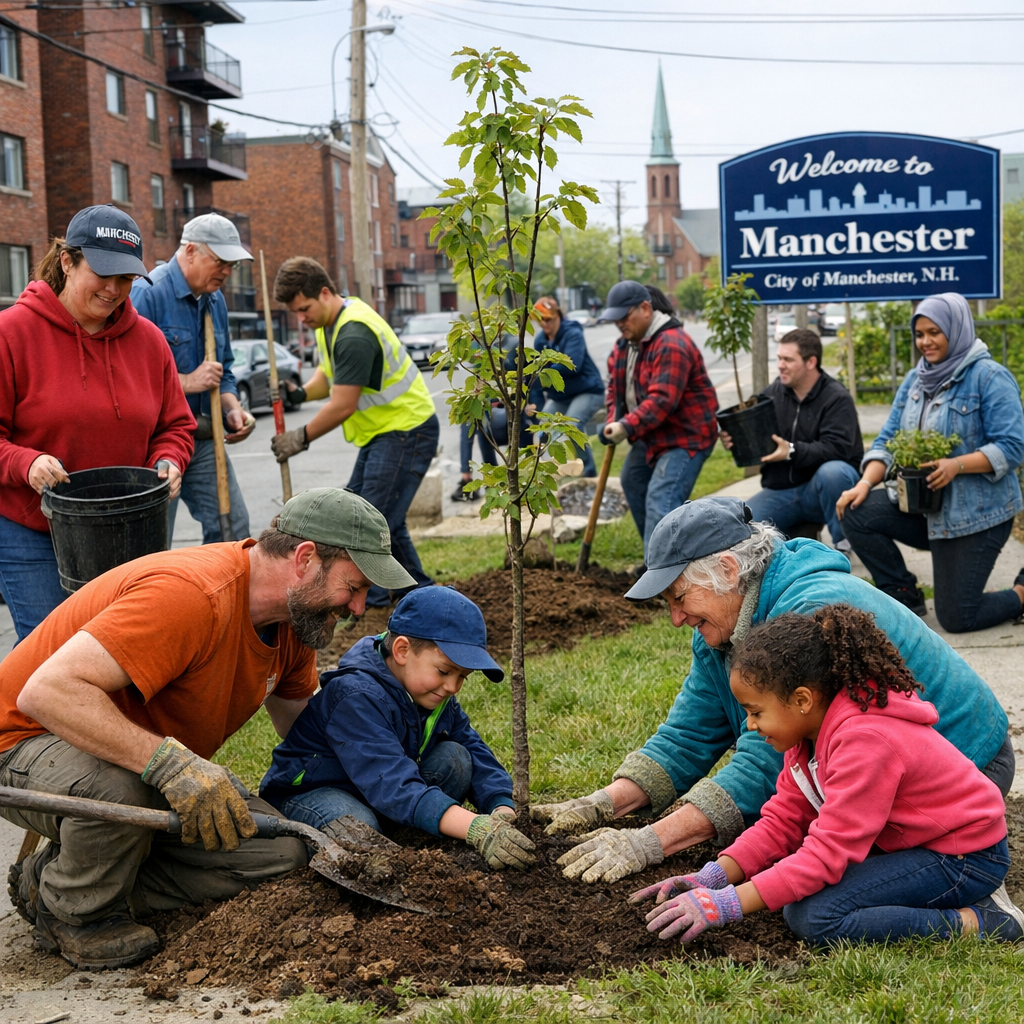
Manchester, New Hampshire, is actively engaging in environmental initiatives to enhance sustainability and community well-being. These efforts encompass various programs and projects aimed at preserving natural resources, improving public health, and fostering environmental education.
Environmental Health Programs
The city’s Environmental Health Branch is dedicated to identifying and mitigating environmental conditions that may affect residents, workers, and visitors. Their responsibilities include:
- Inspecting licensed facilities and reviewing applications and plans.
- Investigating environmental health complaints and potential public health hazards.
- Monitoring environmental conditions such as water quality and vector activity.
- Collaborating with other city departments, state agencies, and community partners to address environmental health issues.
These efforts are organized into program areas such as Food Safety and Permits, Housing and Healthy Homes, Institutional Inspections, Mosquito and Tick Program, Septic Systems, and Recreational Water Quality. More information can be found on the city’s official website.
Conservation Efforts
Since its formation in 1989, the Manchester Conservation Commission has worked to preserve the city’s natural resources for the benefit of its citizens and wildlife. Their responsibilities include:
- Advising the New Hampshire Department of Environmental Services on applications to disturb wetlands in the city.
- Cataloging, researching, and planning for the protection of the city’s natural resources, including watersheds, open spaces, wetlands, and endangered species.
- Acquiring property interests in land for the city to hold in conservation and maintaining their quality.
- Promoting conservation activities and cleanups of ponds and other natural places.
- Advising other city boards, such as the Planning Board and Zoning Board of Adjustment, on environmental impacts of development.
Details about the commission’s work are available on the city’s website.
Urban Forestry Program
Manchester has been granted an Urban Forestry program to be launched over the next several years. This initiative aims to address tree inequities and heat islands by planting trees and creating green spaces in low-income neighborhoods. The program includes a ‘Tree Ambassador’ component, providing workforce development opportunities to equip community members with urban forestry skills.
Outdoor Classrooms
Southern New Hampshire University (SNHU) has launched an initiative to build a network of outdoor classrooms at three Manchester public schools: Southside and Hillside Middle Schools and Webster Elementary School. Made possible by a grant from the Bosch Community Fund, the ‘EcoSTEM Outdoor Classroom Network’ links Manchester students to the SNHU Arboretum, providing outdoor learning spaces equipped with environmental sensors and monitors.
Environmental Justice Initiatives
The Conservation Law Foundation (CLF) is working to advance environmental justice efforts in New Hampshire. In Manchester, an Environmental Justice Advisory Group has led efforts to find opportunities to stop lead poisoning and build safer streets. This movement has expanded to become a New Hampshire Environmental Justice movement, with partners gathering monthly at the NH EJ Roundtables to stay connected to initiatives across the state.
These initiatives reflect Manchester’s commitment to environmental stewardship and community engagement, aiming to create a healthier and more sustainable city for all residents.