

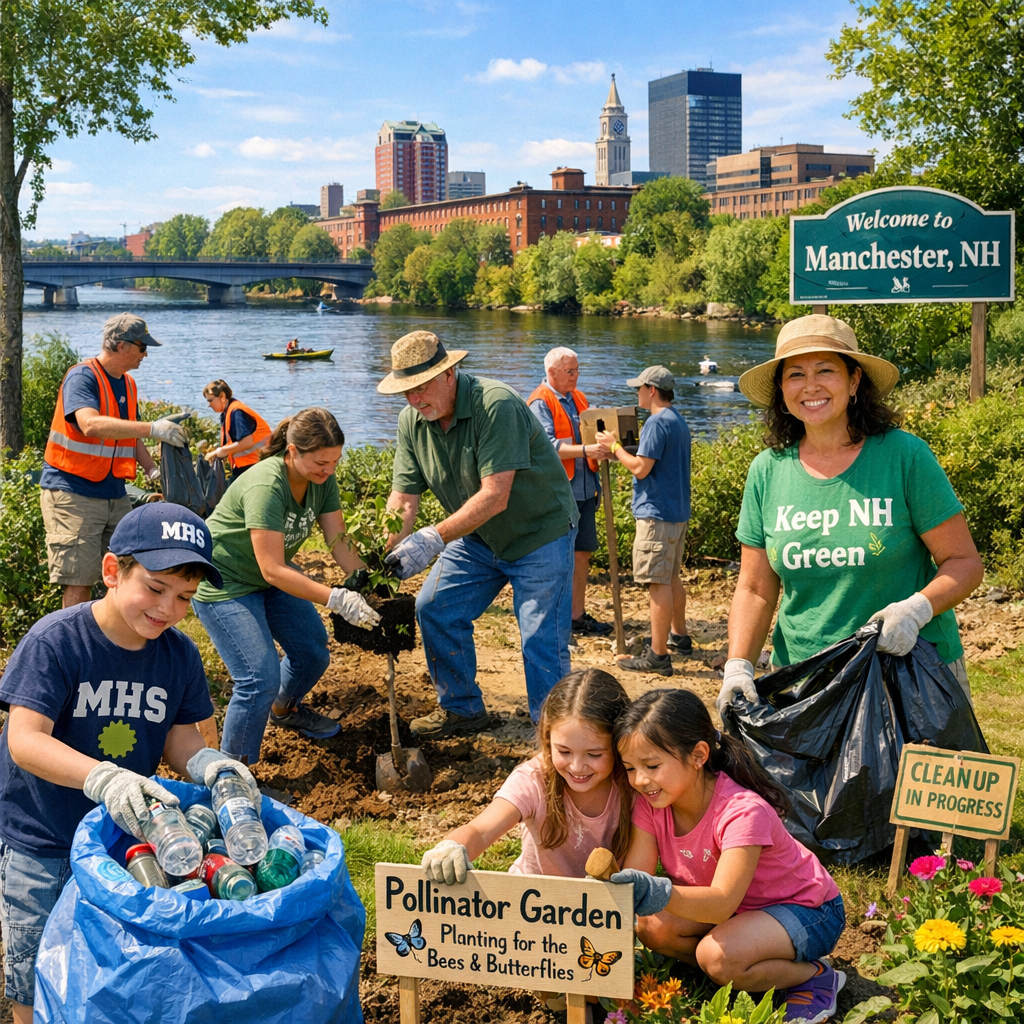
Manchester, New Hampshire, is actively engaging in environmental initiatives to enhance sustainability and address climate challenges. The city’s Environmental Health Branch plays a pivotal role in this effort, focusing on food safety, housing conditions, and vector control to ensure a healthy environment for all residents.
Conservation Efforts
The Manchester Conservation Commission is dedicated to preserving the city’s natural resources. Their responsibilities include advising on wetland disturbances, cataloging natural resources, and promoting conservation activities. These efforts aim to improve water and air quality, protect wildlife habitats, and provide recreational opportunities for the community.
Water Quality Improvements
In collaboration with federal and state agencies, Manchester has committed to a comprehensive plan to reduce sewage overflows into the Merrimack River. This 20-year initiative is expected to decrease annual combined sewer discharge volume by approximately 74%, significantly enhancing water quality and public health.
Air Quality Monitoring
To address air quality disparities, Manchester has implemented the Queen City Air Quality Monitoring Program. This pilot project aims to identify and mitigate differences in air quality across neighborhoods, ensuring all residents have access to clean air.
Community Engagement
Local organizations, such as the New Hampshire Audubon at the Massabesic Center, offer educational programs and outdoor activities to foster a deeper connection with nature. Additionally, initiatives like the McQuesten Watershed Restoration Project work to protect and improve local waterways, supporting biodiversity and recreational use.
Through these collective efforts, Manchester continues to advance environmental sustainability, demonstrating the power of community involvement in creating a healthier, more resilient city.