
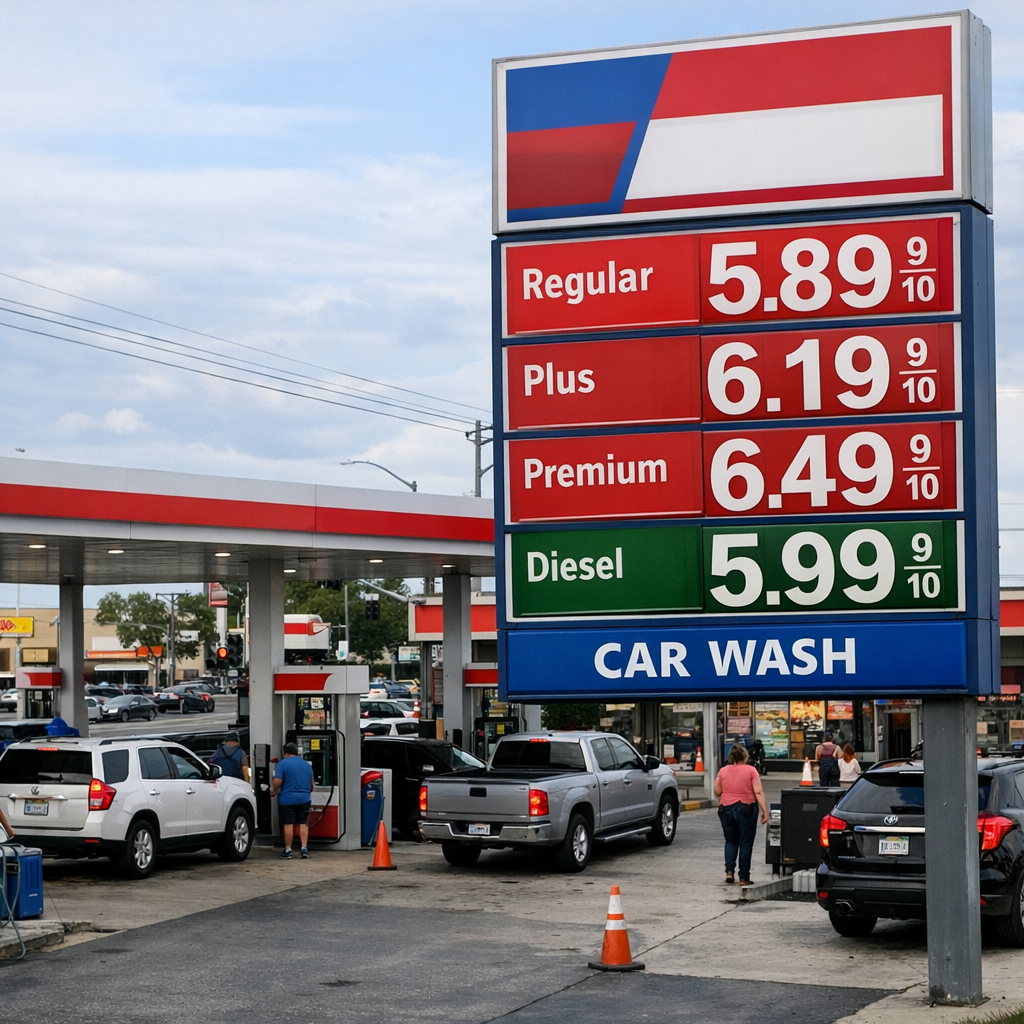
As inflation rates climb and gas prices surge, Americans are facing significant economic challenges that affect daily life and financial stability. In April, inflation reached 3.8%, driven in part by the ongoing conflict in Iran, which has pushed the national average gas price above $4.50 per gallon. This escalation has led to a decrease in real purchasing power, as wage growth has not kept pace with rising costs. Consequently, many individuals are turning to credit to manage expenses, resulting in increased consumer debt and a decline in consumer confidence.
Small businesses are also feeling the strain, with optimism at its lowest since before President Trump’s reelection. Despite a booming stock market, the White House acknowledges the political risks posed by inflation and is focusing on tax cuts, deregulation, and energy independence to stabilize the economy. However, public sentiment remains cautious, with recent polls indicating a 70% disapproval rating of the administration’s economic performance.
In Manchester, New Hampshire, residents are experiencing these national trends firsthand. Local businesses report decreased foot traffic as consumers tighten their budgets, and commuters are adjusting their routines to cope with higher fuel costs. Community leaders emphasize the importance of supporting local enterprises and fostering economic resilience during these uncertain times.
As the nation navigates these economic challenges, staying informed and engaged with both national policies and local initiatives will be crucial for communities like Manchester to adapt and thrive.